Hero roles and a practical party route
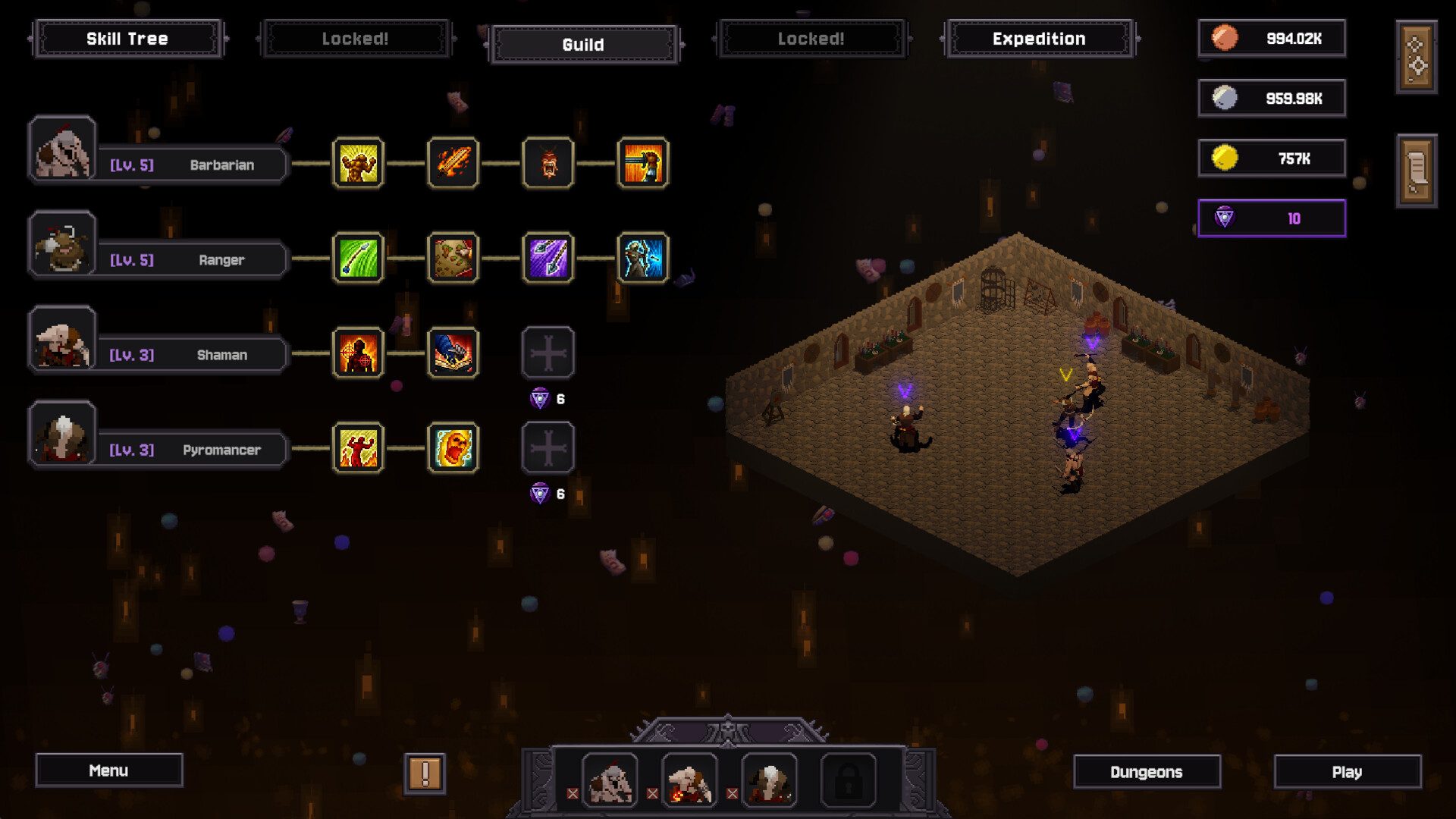
The full game is built around six recruitable heroes. Official demo updates named Barbarian, Archer, Shaman and Wizard. Long-form full-build videos add Pyromancer and Paladin, completing the six-character launch roster seen in pre-release access.| Hero | Practical role | What the footage shows |
|---|---|---|
| Barbarian | Frontline / ramping melee | Kill-based damage growth, rage/crit-style options, party buffs |
| Archer | Consistent ranged damage | Rapid ranged attacks and extra-arrow / area-style upgrades |
| Shaman | Support / debuff / utility | Marking enemies and support-oriented effects |
| Wizard | Spell damage | Lightning/fire-style spell interactions in current footage |
| Pyromancer | Burn / area damage | Fireballs, burning aura and chain/explosion effects |
| Paladin | Party support / holy damage | Party speed buffs, extra hammer hits and synergy effects |
The exact percentages and cooldowns change by upgrade level and build, so this page focuses on roles rather than freezing pre-release numbers into a launch guide.
A stable first party
For a new save, a simple composition is:
- Barbarian to occupy the field and ramp damage;
- Archer or Wizard for reliable ranged coverage;
- Shaman or Paladin when support effects start multiplying the whole team;
- Pyromancer when enemy density makes area/burn damage more valuable than single-target pressure.
The right answer changes with party-slot count. Early on, you are choosing which role solves the current room. Later, cross-hero upgrades make synergy more important than a solo DPS readout.
Why synergy beats raw DPS later
The developer said the full game’s main mechanic is combining heroes through synergized upgrades. That matters because a support hero can look weak on its personal DPS line while increasing the output of every other unit.Examples visible in pre-release footage include:
- Barbarian effects that build damage during a looting session;
- Paladin effects that can improve attack/movement behavior for other heroes;
- Shaman marks that make targets easier to burst;
- ranged heroes benefiting from party-wide or role-targeted buffs;
- Pyromancer effects that scale with dense groups rather than one target.
Blessings
The Blessing system was expanded for the full game and is intended to open new party combinations. Demo v0.8.0 added Wizard alongside three new Blessings, while the release-plan post describes the launch build as having the complete Blessing system.
Because Blessing values are especially patch-sensitive, the launch version of this page does not publish a fake tier list before the live build is available to verify every option.
Hero upgrades and respec
The developer confirmed during playtest feedback that the full game would include a mechanic for resetting all upgrades on a hero. The method was deliberately kept secret at the time. If you are experimenting on launch day, that means hero investment should not be treated as permanently irreversible—but the exact reset cost or unlock should be checked in the live build before spending around it.
Common mistakes
Judging a support hero only by personal DPS. Shaman and Paladin-style effects can create value elsewhere in the party.Sending a core combat hero on an Expedition. Expedition assignment removes that hero from the active party.
Ignoring party slots. Unlocking another slot can outperform a small stat node because it adds an entire new source of damage and synergy.
Copying a demo tier list. Hero movement speed, attack speed, Skill Tree balance and Blessings were all adjusted during the demo cycle.