
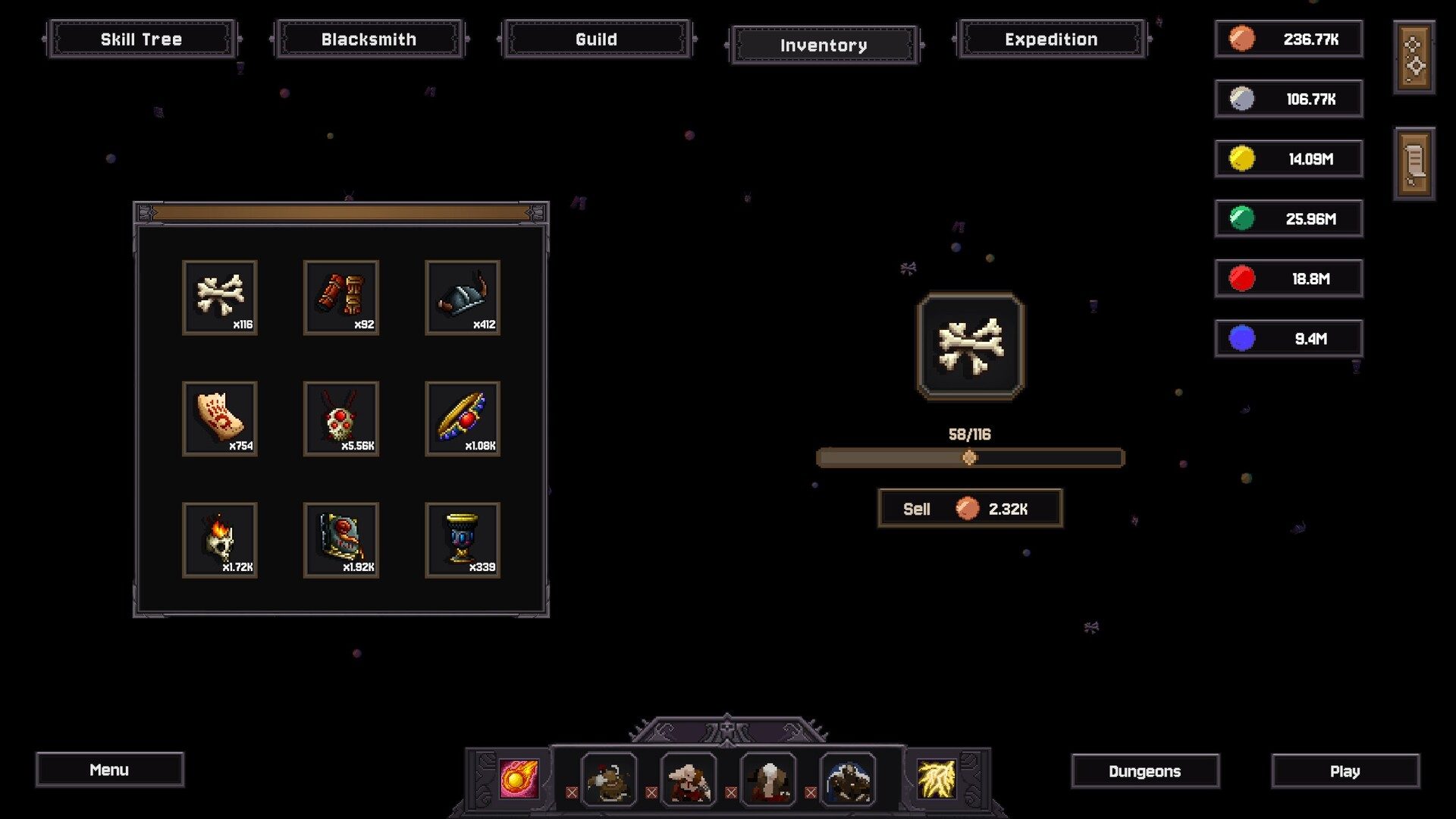
The safe crafting route
- Check the next weapon’s required currency and item drops.
- Open Dungeons and confirm which enemy/room can produce that item.
- Keep the required amount in Inventory.
- If the drop rate is the bottleneck, buy item-drop support before grinding dozens of weak runs.
- Sell only surplus items once the next craft is protected.
- Forge and compare the new attack in an actual crowded room.
This order sounds obvious, but the game intentionally mixes crafting materials with sellable loot, which makes “sell all” a dangerous habit.
Why it works
A coin shortage can often be fixed in a few farming sessions. A missing rare item can take far longer because you need the correct enemy, room and drop chance. Protecting recipes therefore has higher expected value than maximizing every short-term sale.The developer has also said the game is designed to keep older coin types relevant. That means returning to an earlier room for a material or currency is normal, not a sign your progression route is broken.
What to sell
Sell when all three are true:
- the item is not required by the next visible weapon;
- you have a comfortable reserve for another known craft;
- the sale gets you across a meaningful upgrade threshold now.
If one of those is false, waiting is usually safer.
Common mistakes
Selling the last copy of a required drop. Always inspect the Blacksmith first.Farming the highest room by default. Higher rooms can have a different drop table and currency mix. The item you need may live earlier.
Crafting for cosmetic novelty. Unique animations are part of the fun, but progression should still consider clear speed and attack coverage.
Assuming demo recipes are final. Launch balance can change costs and material requirements.