
Recommended route
There is no single permanent “best” node because the tree branches into economy, progression, heroes and combat. There is a reliable order for solving the bottlenecks most players hit.| Priority | Upgrade family | Buy when |
|---|---|---|
| S | Coin value / double coins | Almost immediately |
| S | XP per kill / XP multipliers | As soon as affordable |
| A | Skeleton count / spawn-on-kill / passive spawn | The room starts going empty |
| A | Weapon area | You are spending too much cursor travel per kill |
| A | Item drop chance | Before crafting becomes the next gate |
| B | Raw weapon damage / attack speed / crit | Enemies survive too long |
| B | Session duration | Only after spawn density can support it |
| B | Party slots / hero unlocks | As soon as they open meaningful synergies |
| Context | New rooms / new currencies | When your current room is farmed efficiently |
Economy first does not mean “never buy damage”
A common incremental-game mistake is taking “economy first” as a religion. If a new room’s enemies survive multiple passes of the cursor, your income collapses because kill speed is the economy. At that point damage, area, attack speed or a better weapon can beat another small coin multiplier.
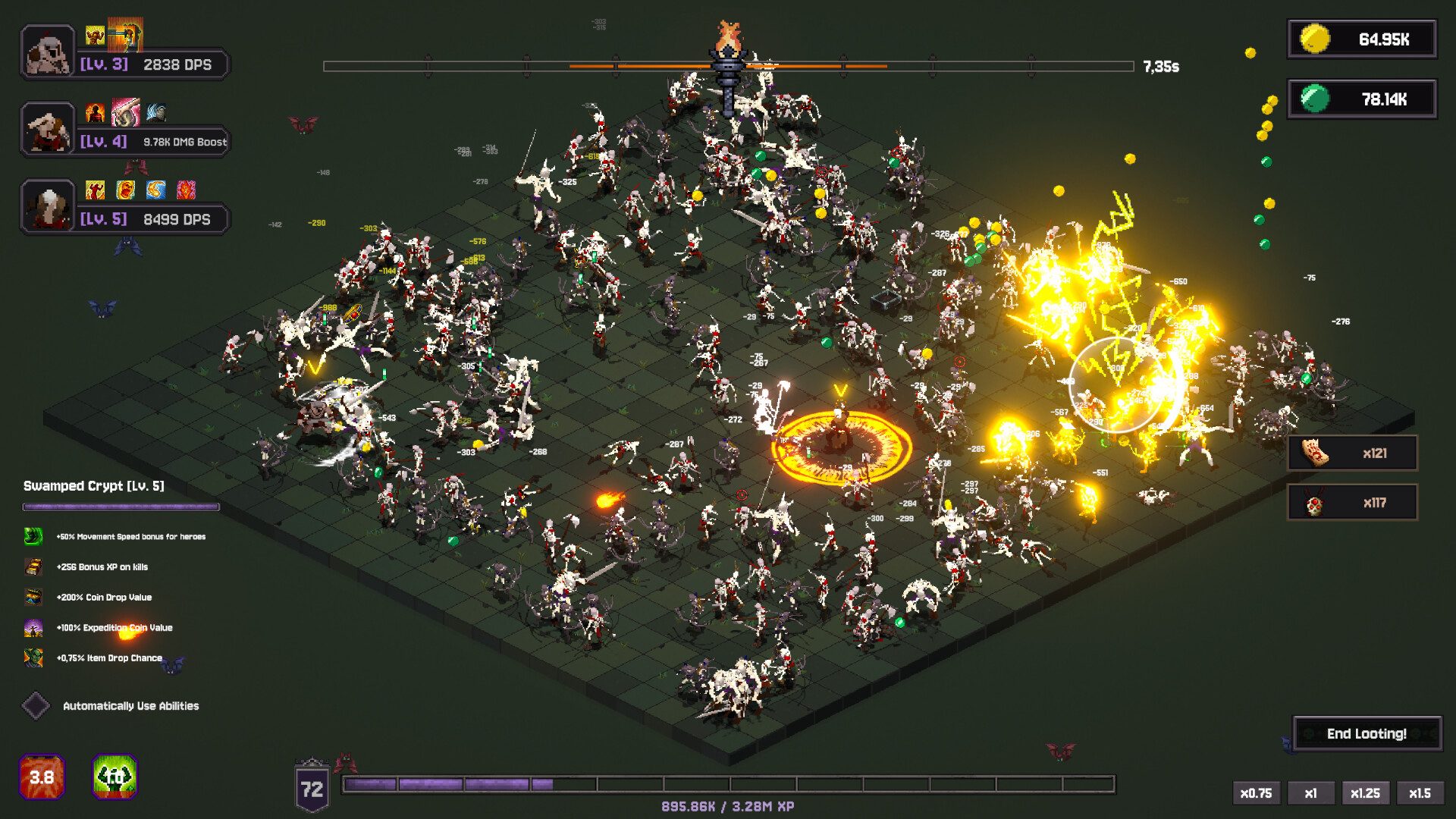
Use the screen as the diagnostic tool:
- Too many enemies alive: damage/area/weapon.
- No enemies left: spawns/skeleton limit.
- Coins arrive too slowly: coin value/double-coin effects.
- Tree unlocks stall: XP.
- Weapon craft stalled by drops: item chance and the correct room.
Why it works
The developer’s own tree layout helps explain the intended progression. In a Steam discussion, the developer described the tree roughly as:- Right: progression — rooms, enemies, coins.
- Left: Guild and heroes.
- Bottom: damage and weapons.
- Top: XP and general upgrades.
The layout is not perfectly clean, but it is useful for planning. Rather than following one branch to the end, buy the cheapest high-impact nodes from several quadrants as your current bottleneck changes.
Session duration is a multiplier, not a foundation
Adding seconds sounds universally strong, but early playtest feedback showed a real problem: longer sessions sometimes had too few enemies remaining. Later demo updates specifically changed spawning and room limits to keep long runs active. That is why duration belongs behind spawn density in a generic priority list.
Item drops become stronger than they look
Item chance is unimpressive when the only reward you can see is a bone. It becomes high-value once weapons require specific materials and enemies begin dropping exclusive items. The full game advertises nine unique enemies with exclusive drops and sixteen weapons, so item infrastructure becomes a progression system, not a side bonus.
Common mistakes
Maxing one branch because it looks tidy. The tree is intentionally mixed across progression, Guild, damage and XP. Solve the next bottleneck instead.Buying a room unlock with zero reserve. A new room can be less profitable until you also buy damage, spawn or coin-supporting nodes for its tougher enemies.
Overvaluing crit before base throughput. Crit is useful, but early attack area, base damage and economy usually improve more of the run.
Leaving XP too late. XP is what exposes more of the tree. A stalled level curve can make every other plan feel slow.